
The History of Escort Services in Paris: From Brothels to Modern Companionship
Paris has long been known as a city of romance, art, and freedom-but beneath its cobbled streets and café lights lies a quieter, older story: the history of paid companionship. Escort services in Paris didn’t start with online ads or Instagram DMs. They began in the shadowed corners of medieval markets, flourished in the salons of the Enlightenment, and evolved into the discreet, legal gray zones of today. This isn’t just about sex work. It’s about power, survival, social mobility, and how a city’s identity is shaped by those who operate outside its official rules.
Medieval Roots: From Brothels to Bawdy Houses
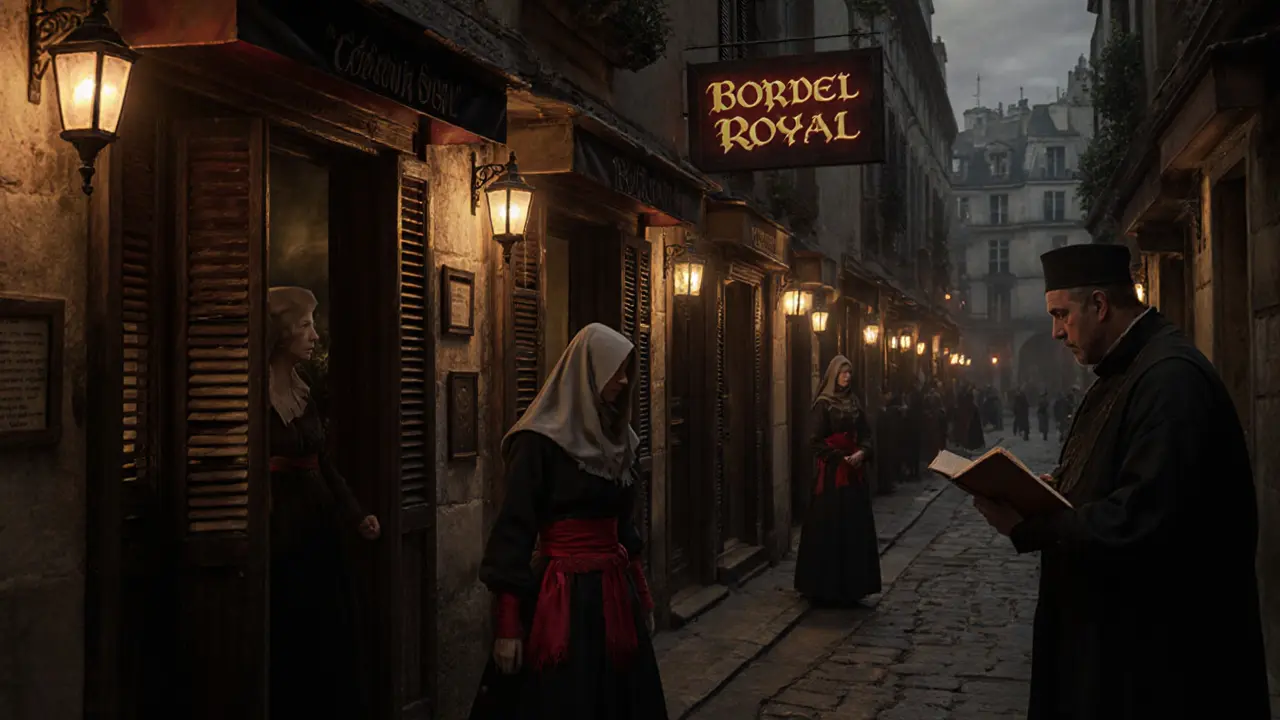
In the 13th century, Paris had over 100 licensed brothels, called bordels, mostly clustered near the Seine and outside city walls. These weren’t hidden underground dens-they were public institutions, regulated by the city and taxed by the crown. King Philip IV even owned one. Women working in these spaces were registered, inspected for disease, and forced to wear distinctive clothing. It was crude, controlled, and brutally honest. The city saw prostitution as a necessary evil-a way to keep noble men from seducing married women or committing worse crimes.
By the 15th century, the Church and moral reformers pushed back. Brothels were shut down or moved farther from churches and schools. But demand didn’t disappear. Women who lost husbands, fathers, or sons to war often turned to sex work out of survival. Others were trafficked from rural areas under false promises of domestic work. The system was exploitative, but it was also one of the few paths to financial independence for women with no inheritance or legal rights.
The Enlightenment and the Rise of the Courtesan
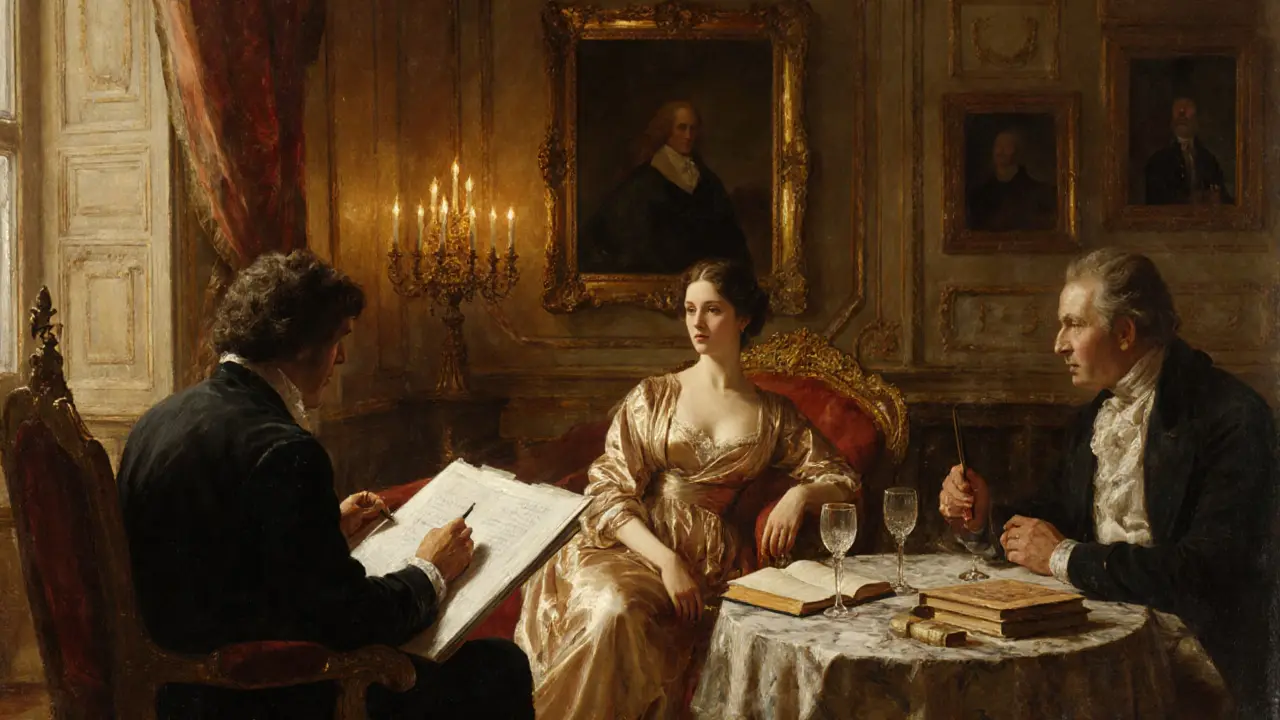
The 18th century changed everything. As Paris became the intellectual capital of Europe, a new kind of companion emerged: the courtesan. These weren’t streetwalkers. They were educated, witty, and well-connected. Women like Madame de Pompadour and Juliette Récamier moved in royal circles, hosted salons, and influenced politics-not through titles, but through charm and intimacy.
These women didn’t just provide sex. They offered conversation, art criticism, political gossip, and emotional support. Some became patrons of painters like Fragonard and writers like Voltaire. Their relationships with wealthy men were often formalized through contracts. In return for lodging, jewelry, and an allowance, they gave companionship on the woman’s terms. This was the first real shift-from transactional sex to emotional labor as a service.
By the late 1700s, Paris had more courtesans than ever. They lived in elegant apartments on the Rue de la Paix and Rue Saint-Honoré. Their names appeared in newspapers. Their portraits were sold as prints. For the first time, paid companionship was glamorized, not just tolerated.
The 19th Century: Legalization, Scandal, and the Birth of the Modern Escort
In 1804, Napoleon’s government passed the Réglementation-a system that forced all sex workers to register with police, undergo weekly medical exams, and carry identification cards. Brothels were still legal, but only in designated zones. The system was meant to control disease and public morality, but it also created a bureaucratic underclass. Women who refused to register were arrested, fined, or sent to workhouses.
At the same time, the rise of the middle class changed the game. Wealthy businessmen, not just nobles, wanted discreet companions. The traditional brothel was too public. Enter the maison de tolérance-private apartments where women received clients by appointment. These were the ancestors of today’s independent escorts.
By the 1880s, Paris had over 2,000 registered sex workers. But many more worked outside the system. Photographers like Charles Marville captured their lives in quiet moments: women reading in their rooms, walking alone at dusk, sitting by windows. These images show something rarely discussed: loneliness beneath the glamour. Many of these women were young, isolated, and trapped-not by choice, but by circumstance.
20th Century: Prohibition, War, and the Underground
In 1946, France outlawed brothels under the Loi Marthe Richard. The law was framed as liberation-freeing women from exploitation. But in practice, it pushed the industry underground. Without regulated spaces, women became more vulnerable to violence and police harassment. Pimps and organized crime moved in. The city’s once-open system collapsed into chaos.
During World War II, Paris saw a surge in sex work. German soldiers paid in currency that held value. French women, many widowed or abandoned, turned to companionship to feed their children. After the war, the U.S. military presence brought new demand. American GIs sought “Parisian charm,” and a new market emerged: English-speaking escorts who could navigate both cultures.
By the 1970s, the feminist movement split on the issue. Some saw sex work as oppression. Others argued it was labor-and that criminalization hurt the very people it claimed to protect. In 1981, the French government removed the requirement for medical registration. The state stopped tracking sex workers entirely. That’s when the modern escort industry began to form: quiet, digital, and decentralized.

21st Century: The Digital Age and the New Parisian Companion
Today, there are no official numbers on how many people work as escorts in Paris. But estimates from NGOs and researchers suggest between 5,000 and 10,000 individuals operate independently. Most work online-using platforms like OnlyFans, private websites, or encrypted messaging apps. They set their own rates, choose their clients, and often have other jobs: art students, translators, writers, or freelancers.
The stigma hasn’t vanished, but it’s changed. A 2023 survey by the Paris-based NGO Association pour les Droits des Femmes found that 68% of female escorts in the city reported feeling safer working alone than in the past. Many cite the ability to screen clients, use GPS sharing, and avoid pimps as key improvements.
Parisian escorts today are diverse. Some are French women from working-class backgrounds. Others are international students from Brazil, Romania, or Thailand. A growing number are non-binary or transgender individuals seeking income without discrimination. The service isn’t just about sex-it’s about being seen, heard, and respected. Many clients seek emotional connection more than physical intimacy.
Legal gray areas remain. While selling sex isn’t illegal in France, buying sex is. Since 2016, clients can be fined up to €1,500. This “Nordic model” was adopted to protect workers-but critics say it drives the industry deeper underground, making it harder for workers to report abuse or access social services.
What’s Next? The Future of Companionship in Paris
Paris is at a crossroads. Younger generations are less interested in secrecy and more in transparency. Some escorts now openly identify as sex workers on social media. Others have formed collectives to offer legal advice, health screenings, and mental health support. A few have even started podcasts about their lives.
The city’s history shows that attempts to erase sex work always fail. What changes is how it’s understood. The courtesans of the 1700s were seen as dangerous seductresses. The women of the 1900s were viewed as victims. Today, many are seen as entrepreneurs.
Paris won’t stop being Paris. And as long as people seek connection, comfort, or escape, someone will be there to offer it-for a price. The real question isn’t whether escort services will survive. It’s whether the city will finally treat them as work, not crime.
Were brothels legal in Paris in the 1800s?
Yes. Brothels, known as maisons de tolérance, were legal and regulated in Paris from the early 1800s until 1946. They were required to register with police, undergo inspections, and pay taxes. The government saw them as a way to control public morality and prevent disease. After 1946, the Loi Marthe Richard shut them down entirely, pushing sex work into the underground.
Is it legal to be an escort in Paris today?
It is legal to sell sexual services in Paris, but illegal to buy them. Since 2016, France has enforced the Nordic model, which criminalizes clients-not workers. Escorts can advertise, set their own hours, and work independently. However, operating from a fixed location, soliciting in public, or living off earnings (as a pimp) remains illegal. This creates a dangerous gray zone where workers can’t easily access legal protection.
How did the French Revolution affect sex work in Paris?
The French Revolution didn’t end prostitution-it changed who controlled it. Before 1789, brothels were run by the monarchy and local authorities. After the revolution, the state tried to abolish them, calling them immoral relics of the old regime. But without state oversight, organized crime and unregulated operators took over. Many women lost their regulated, if harsh, protections. The revolution promised equality, but for sex workers, it meant more vulnerability.
What role did courtesans play in Parisian society?
Courtesans were cultural power players. Unlike street workers, they lived in luxury, hosted salons, and influenced artists, writers, and politicians. Women like Madame du Barry and La Païva weren’t just mistresses-they were patrons of the arts, collectors of rare books, and advisors to nobles. Their relationships were often contractual, with financial security in exchange for companionship. They helped shape Paris’s reputation as a city of wit, beauty, and intellectual freedom.
Are there any famous historical figures who were escorts?
Some women who worked as escorts or courtesans became famous for their influence, not just their profession. Juliette Récamier, a celebrated beauty and salon hostess, was rumored to have been a courtesan before marrying into wealth. Madame de Pompadour, mistress of Louis XV, was a key cultural figure who shaped French art and politics. While not all were formally labeled as escorts, their lives blur the line between romance, patronage, and paid companionship. Their stories show how sex work could be a path to power-even in a deeply patriarchal society.