
Most Iconic Movies and Books Featuring Escorts in Paris
Paris has long been a backdrop for stories about desire, survival, and identity-and few characters embody that tension more than the escort. Not the glamorous fantasy sold in ads, but the real, complicated humans navigating love, loneliness, and power in one of the world’s most beautiful cities. These stories aren’t about sensationalism. They’re about people trying to survive, to be seen, to find meaning in a place that often treats them as invisible.
La Grande Illusion (1937) - The First Glimpse
While not centered on an escort, Jean Renoir’s classic war film includes a scene that quietly reshaped how Parisian women in transactional relationships were portrayed. A French woman, once part of high society, now lives on the margins, offering companionship to officers in exchange for food and shelter. Her dignity isn’t erased by her circumstances-it’s sharpened by them. Renoir didn’t label her. He showed her. That restraint made her more real than any later stereotype.
Amélie (2001) - The Myth and the Mirror
Amélie Poulain isn’t an escort. But the film’s visual language is saturated with Parisian women who are. In one fleeting shot, a woman in a red coat walks past a café, her heels clicking on cobblestones, eyes distant. The camera lingers just long enough to make you wonder: is she going to a client? To a job? To escape? Jean-Pierre Jeunet never answers. That ambiguity is the point. The film doesn’t glorify or condemn-it reflects how Paris itself treats these women: as part of the scenery, never the story.
Under the Cherry Moon (1986) - Glamour as Armor
Prince’s directorial debut is a strange, glittering mess. But its portrayal of a Parisian escort named Mary Sharon (played by Kristin Scott Thomas) is oddly compelling. She’s not a victim. She’s not a villain. She’s a woman who chose control over dependence. She wears designer clothes, speaks fluent French and English, and negotiates her own terms. The film’s campy tone distracts from its quiet truth: in Paris, an escort can be the most powerful person in the room-if she knows how to play the game.
Call Me by Your Name (2017) - The Escort Who Wasn’t
There’s a moment in this film where a minor character, a young man who works as an escort in Paris, is mentioned in passing. He’s not on screen. He’s not named. But his existence is felt. The protagonist, Elio, hears about him from a friend and is both intrigued and unsettled. The film doesn’t judge. It doesn’t explain. It simply acknowledges that in Paris, even the people you never meet shape your understanding of intimacy. This whisper of an escort becomes a mirror for Elio’s own confusion about desire, class, and secrecy.
Paris, je t’aime (2006) - Fragments of Lives
This anthology film, made of 18 short stories set in different arrondissements, includes one segment titled "Quartier des Enfants Rouges" directed by Alfonso Cuarón. It follows a young woman who works as a paid companion to an elderly man. Their relationship is quiet, tender, and deeply human. She reads to him. He teaches her French poetry. She never calls herself an escort. He never calls her one either. The film doesn’t need to. The money is implied. The connection is real. This is one of the few films where the escort isn’t a plot device-she’s a person with a past, a voice, and a future.
Madame Bovary (1856) - The Literary Blueprint
Flaubert’s novel isn’t about Paris, but it shaped every story that came after it. Emma Bovary’s affairs aren’t just romantic escapades-they’re desperate attempts to buy meaning in a world that offers her none. She takes lovers, accumulates debt, and eventually turns to transactional relationships to fund her fantasies. Her downfall isn’t lust. It’s the impossibility of escaping the social cage she was born into. Modern novels about Parisian escorts still echo Emma’s tragedy: the cost of wanting more in a city that rewards appearance over authenticity.
Les Liaisons Dangereuses (1782) - Power in the Shadows
Though set in 18th-century France, this epistolary novel is the original blueprint for the Parisian escort as political player. The Marquise de Merteuil doesn’t just sleep with men-she uses sex as currency to destroy rivals, manipulate the aristocracy, and control her own fate. She’s not a victim of the system. She’s its most ruthless architect. Modern retellings, like the 1988 film Valmont, keep her spirit alive. In Paris, the escort who wields influence isn’t hidden in the alleys-she’s seated at the table.
Paris, 13th District (2021) - The Modern Reality
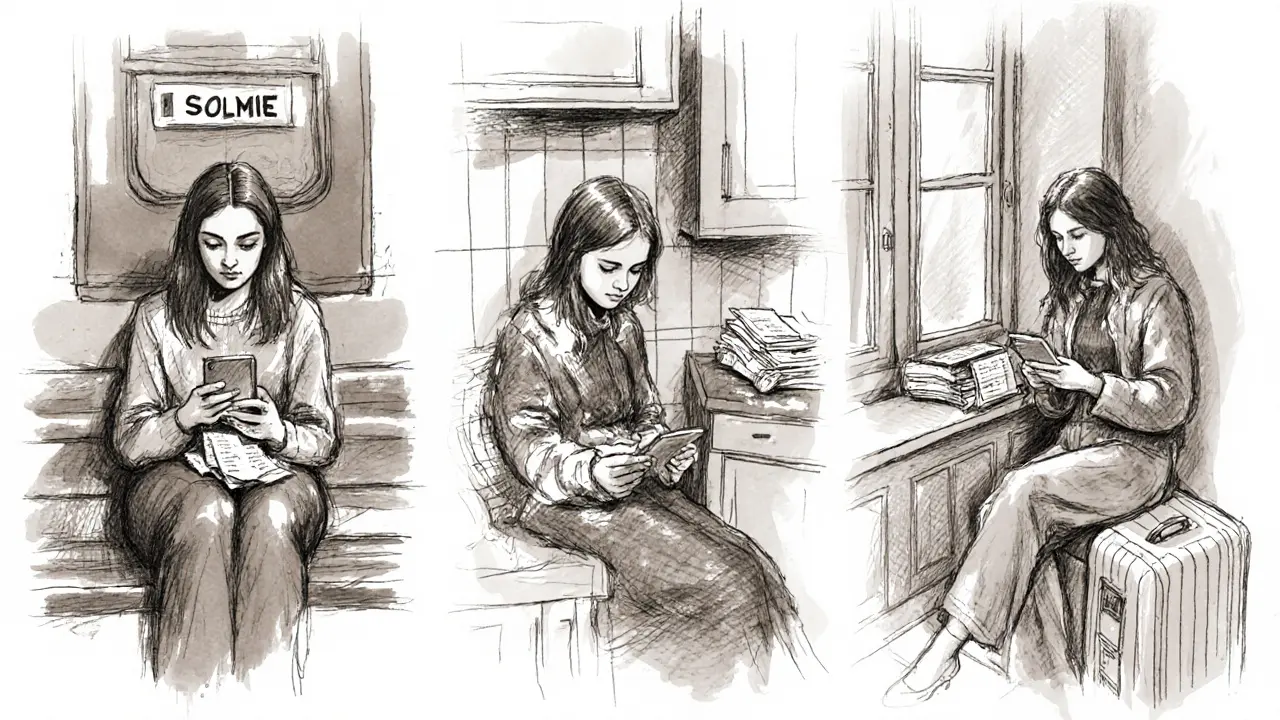
Jacques Audiard’s film is the most honest portrayal of contemporary Parisian escorts you’ll find. Three women-Camille, Émilie, and Adriana-navigate apps, clients, and emotional exhaustion. One works through a dating app, another through a classified site. None of them have a "backstory" that justifies their work. They’re not abused. They’re not heroes. They’re just trying to pay rent. The film shows them in their apartments, in the metro, on the phone, laughing with friends. No melodrama. No moralizing. Just life. Audiard filmed real women who once worked as escorts to play the roles. Their voices aren’t scripted. They’re lived.
The Escort (2013) - A Novel That Broke the Silence
Written by French author Émilie de Turckheim, this novel follows a woman in her late 20s who becomes an escort after losing her job and her partner. The book doesn’t romanticize. It doesn’t punish. It tracks her daily routines: the cleaning rituals before clients arrive, the way she learns their names, the silence after they leave. The most powerful moment isn’t a dramatic confrontation-it’s when she realizes she’s started to miss the quiet company of strangers more than the company of people who claim to love her. The novel became a bestseller in France because it didn’t ask for sympathy. It asked for recognition.
Why These Stories Matter
These films and books don’t exist to titillate. They exist because Paris is a city of contradictions. It celebrates beauty while ignoring the people who make it possible. It offers freedom while trapping women in invisible systems. The escort in these stories isn’t a trope. She’s a lens. Through her, we see how class, gender, and urban isolation shape lives in ways the city refuses to name.
What makes these portrayals iconic isn’t their shock value. It’s their refusal to simplify. They show escorts who cry after clients leave. Who read poetry. Who save money for a trip to Normandy. Who hate the rain because it makes the metro smell worse. Who don’t want to be saved-they want to be understood.
What’s Missing
There’s still a gap. Most stories focus on white women. The experiences of Black, North African, and immigrant escorts in Paris are rarely told. When they are, they’re framed through trauma or crime. The truth is more complex: many of these women are students, artists, single mothers. They work because the system leaves them no other choice. Their stories need to be told-not as exceptions, but as part of Paris’s true fabric.
These films and books aren’t about sex. They’re about survival. About the quiet courage it takes to keep showing up, day after day, in a city that doesn’t always see you.
Are these movies and books based on real people?
Some are fictional, but many draw from real experiences. For example, the film Paris, 13th District cast actual former escorts in key roles. The novel The Escort by Émilie de Turckheim was informed by interviews with women working in the industry. These creators didn’t invent characters-they listened to lives.
Why do so many stories set escorts in Paris?
Paris has a long history of blending romance with realism. It’s a city where beauty is expected, and survival often means bending the rules. The city’s architecture, its cafés, its light-it all creates a stage where personal struggles feel cinematic. Plus, French culture has long tolerated, if not always celebrated, the idea of the courtesan. That legacy lingers, making Paris a natural setting for these stories.
Do these portrayals glamorize escort work?
No-not the good ones. Glamorization happens in ads and tabloids. The films and books that endure show the exhaustion, the loneliness, the small victories. They show women who are tired, smart, and tired again. They don’t wear diamonds. They wear worn-out shoes. The real glamour is in their resilience, not their outfits.
Is escort work legal in Paris?
Sex work itself isn’t illegal in France, but soliciting, pimping, and operating brothels are. Clients can be fined. Workers are not arrested, but they’re not protected either. This legal gray zone makes life unpredictable. Many women work through apps or private arrangements to stay under the radar. The law doesn’t help them-it just makes them more vulnerable.
Where can I find more stories like these?
Look for French literature by women like Christine Angot, Virginie Despentes, or Marie NDiaye. Documentaries like Les Femmes du Paris and La Vie en Rose: Women of Montmartre offer real voices. Independent publishers like Éditions des Femmes have released memoirs by former escorts. These aren’t mainstream, but they’re honest.